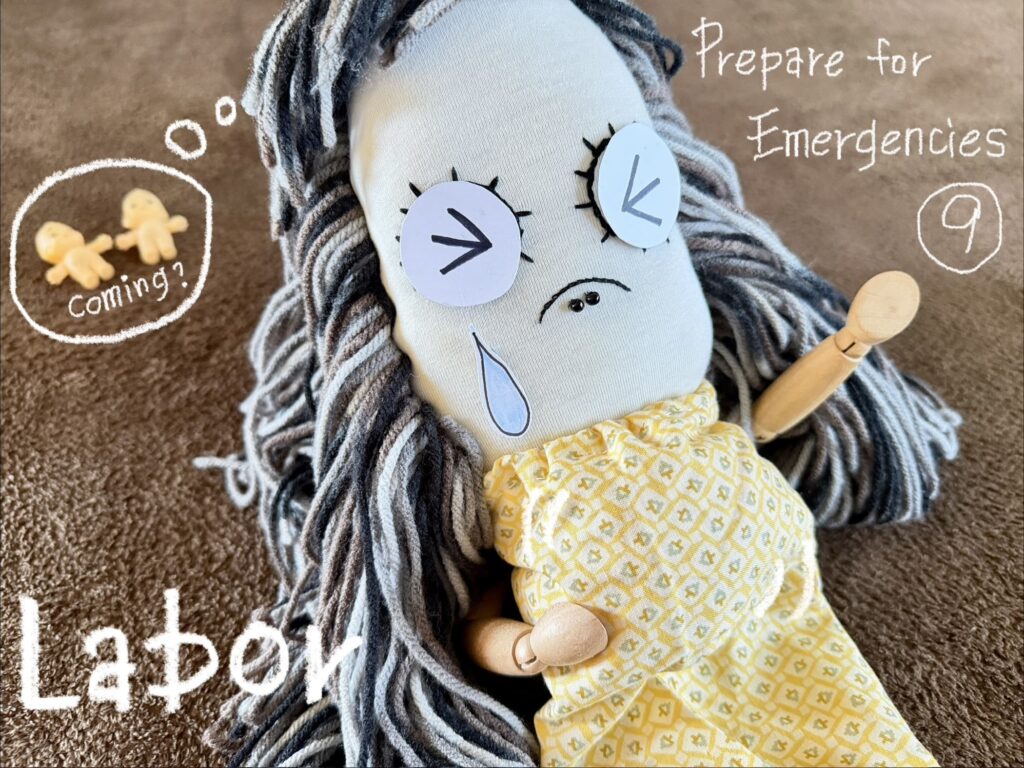
What to do if you go into labor during a disaster?
もし災害時に陣痛が始まってしまったら、どうしたらいい?
I am 9 months pregnant. I never thought about major disasters.
My wife is 10 months pregnant. I think she is going to go into labor soon. We will be OK!
My daughter is expecting her baby very soon,
but I have no idea how to help her give birth, during a disaster.
I can not give her any advice…
It is said that no two births are exactly the same. Every mother has their own stories of labor and delivery, and among those stories are those of the brave moms who gave birth in emergency situations.
I used to work as a nurse in a maternity unit.
In the 5 years I spent helping to deliver babies,
I never saw two childbirths that were exactly the same. Each time was different.
This post might make you scared to go into labor, but I think it’s important. Moms and their families should appreciate what a blessing it is to have a peaceful delivery, under normal, non-emergency circumstances.
Even to this day, there are moms giving birth, without medical intervention and without skilled assistance, because of severe healthcare shortages, cultural traditions, and geographic isolation, among other reasons.
After a major disaster, you might be unable to reach the hospital or evacuation shelter because of blocked streets, blackouts, or any number of other, unexpected circumstances. You might not even be able to get out of your area.
We must not think that we are immune to the unexpected. We live in this world, not some fantasy world. The reality is, we might be on the verge of a major disaster, and we just don’t know it.
What can you do?
Animal instincts!
I am sorry, it sounds like I’m messing around.
Learn. Gain knowledge! Knowledge is power!!

⚠︎ Be careful!
In this post, I talk about giving birth in emergency situations with the assumption that the pregnant mom doesn’t need a caesarean section (C-section).
If your doctor mentions you need or might need a C-section, I recommend you stay with somebody all the time or live near the hospital during your last few months of pregnancy.
The ideas in this blog are intended for educational, informational, and inspirational purposes only.
I am a registered nurse, but my posts should not be considered a substitute for in-person, medical care.
I am not practicing medicine here, and my explanations may not apply to your specific case. Also, if you’re reading this a long time after the original post date, be aware that the information presented may be outdated.
Prepare for emergency labor
As you know, once labor starts, you can not stop until the baby is born. If you can reach the hospital or an evacuation shelter after a major disaster, you will be lucky. But if not — if you can not get medical attention or skilled assistance — it will be extremely challenging to have a baby, all by yourself.
Be strong and follow these steps. A, B, and C below are a quick summary. Keep reading for more detailed information.
A. Find a safe place.
B. Three key points, to be done as soon as possible:
This is the TLDR right here. If you take anything away from this post, it should be these three key points.
▪︎ Wipe the baby
▪︎ Make the baby cry (to start breathing)
▪︎ Keep the baby warm
C. Call for help if possible.
First, remember these points (A, B, and C above, especially B).
I will explain everything in more detail, below.
What to do before the baby comes
1. Check your contractions time.
If you are having strong, long, frequent contractions (occurring fewer than five minutes apart), or if your water has broken and you have a strong urge to push, you are experiencing signs that delivery is imminent.
Labor can take many hours, sometimes even more than a day. Keep eating, drinking, and sleeping if possible.
First babies’ births do tend to take longer than a second or third child,
so subsequent deliveries may happen a little more quickly.
But things don’t always go smoothly. There’s no really good time to bring this up,
so I’ll just mention it now: check out this page about obstetric fistulas.
2. Find as safe a place as possible.
▪︎ Try to find a clean, dry, warm space for your delivery.
▪︎ Put down blankets and towels if you have them (or can find them). If you don’t have any, you might need to use the clothes you’re wearing.
If you don’t have any help, you must catch your baby, yourself.
You might have to find a soft surface and a towel (if you have one) in case you miss the catch.
Have you ever seen an animal give birth, on TV? We need that.






3. Take a position that feels comfortable: sitting, on hands and knees, squatting, and lying down are all OK options.
When you push the baby’s head out, you might be a bit distracted, and you might forget to catch the baby. It’s best to keep a safe position so that the baby can slip gently onto a soft surface.

4. Take slow, deep breaths during your contractions. Then allow your body to push naturally.
▪︎ Do not pull or tug the baby.
▪︎ No yelling. No closing your eyes. (You diminish your pushing power by yelling and closing your eyes. You need to focus and direct your pushing power downward, like you are having a bowel movement. And do not forget to catch the baby!)
You might need to be lying down or squatting, so the baby can slip gently onto a soft surface.
This way, if you can not receive the baby because of pain, panic,
or because it comes out too quickly, the baby will touch down without injury.
(For an example of this, check out: Precipitous Labor.)
What to do as the baby is born
1. Receive the baby gently. Do not pull.
▪︎ Catch and hold the baby’s head, but don’t pull the head. The baby will emerge, gradually. (If you see the umbilical cord around the baby’s neck, hook a finger under it and slowly, gently loosen it to ease it over baby’s head. Don’t pull on the cord.)
▪︎ Once the shoulders are out, lift the baby, holding it under both shoulders. (Be careful! The baby might be slippery.)
▪︎ Next, position one hand under its head and the back of the neck, and move your other hand underneath the baby’s bottom. Then gently lay the baby on its back.
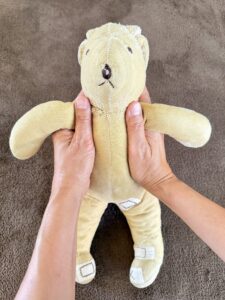

An en caul birth occurs when a baby is born with the amniotic sac still intact.
You need to puncture a hole in the water bag and peel the membrane from the baby’s face,
so the baby can start breathing.
2. Wipe the baby’s mouth and nose immediately, make sure it is breathing, then dry the whole body.
▪︎ If you have a clean dry cloth, that would be best. But if not, use the clothes which you are wearing to wipe the baby’s mouth and nose, first.
▪︎ Keep the infant’s mouth and nose clear of mucus and fluid, so that the baby can breathe.
▪︎ If the baby doesn’t start crying soon after emerging, firmly rub the baby’s back, up and down, to get the baby to cry. If that doesn’t work, place the baby on their back and rub their chest or tap the soles of their feet.
▪︎ When the baby starts crying, it means the baby has started breathing. And then you can wipe the baby’s body.
It’s good practice for pregnant moms to wear a lot of clothes, all the time.
I know that can be difficult…
Maybe it’s possible, at least, to avoid wearing only short pants and a tank top?
3. Do not cut the umbilical cord yet. First, make sure the baby is breathing!
The umbilical cord continues to provide nutrients and oxygen from the placenta for a few minutes. First, make sure the baby is breathing and its color improves. (For more information on this: Spinning Babies.)
4. Put the baby on your belly or chest. (Skin-to-skin contact is important.)
▪︎ After the baby is dried off, place the baby directly on your bare chest or belly. This is the most effective way of keeping the baby warm after giving birth. (Newborns are not great yet at regulating their own body temperature, so it’s important to keep them warm and safe.)
▪︎ If the placenta is still inside of you, sometimes the cord might not be long enough to put the baby on your chest. If so, put the baby on your belly and do not pull the cord.
▪︎ Be careful. The baby’s mouth and nose should not be covered. The baby’s head needs to be turned to the side.
▪︎ Skin to skin contact helps with more than just maintaining the baby’s body temperature. Check this web site: La Leche League International.
▪︎ Skin to skin contact helps the mother’s body with uterus contraction and with removing the placenta from the uterine wall, and ultimately can help prevent postpartum hemorrhage. (NIH: National Institutes of Health.)
If you don’t have any blankets,
put your baby under your top/shirt to keep the baby warm.

5. Tie the umbilical cord. Do not cut it yet.
▪︎ When the baby starts breathing and is kept warm, then you can tie the umbilical cord.
▪︎ Try to find something clean to tie the cord. (For example: hair tie, rubber band, shoelace, thread, ribbon, a strip of cloth torn from your clothes, or even a plastic bag.)
▪︎ Check the umbilical cord to make sure it has stopped pulsing and that the blood has ceased to flow.
▪︎ Measure about two to three finger-widths away from the baby’s belly button, and tie one knot tightly.
▪︎ If you can find one more string, you can tie a second knot another 3 finger-widths further away from the newborn. (If a second knot is not possible, one knot will be enough.)
▪︎ Do not cut the umbilical cord, yet. If possible, ask someone to help you find an evacuation shelter or hospital, and wait to have the umbilical cord cut there. If finding help is not an option, you will need to cut it later, by yourself.
How to help the mom after giving birth
1. Deliver the placenta.
▪︎ After giving birth, your placenta will be delivered naturally within about 5 to 30 minutes. You might feel mild contractions or pelvic pressure as the placenta separates. Don’t pull on the umbilical cord to deliver the placenta. The afterbirth will eventually come out on its own, but you can help things along by firmly massaging your uterus; rub your belly just below your navel to help the uterus contract and reduce bleeding.
▪︎ Allow your infant to suck. Your baby’s sucking will prompt your body to release more oxytocin, the hormone that stimulates contractions. This will help the placenta separate and be delivered.
2. After the placenta is expelled.
After the placenta is out, your bleeding will be like the bleeding from a heavy period. Getting your baby to breastfeed is very important, and it will slow down the bleeding. Try to get your newborn to breastfeed.
3. Leave the placenta attached to the cord.
It will be best to allow medical personnel to take care of cutting the cord when they arrive or when you reach the evacuation shelter. Sterile clamps and instruments should be used to protecting against infection.
In the worst case scenario, you might cut the cord with knife, scissors or even a spoon…
If you can, find a person to help you to sterilize the knife with boiling water before using it.
Cut the cord between the two ties.
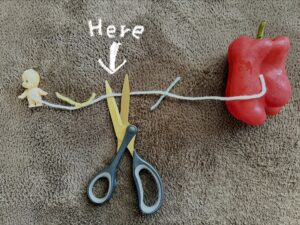
4. If mom still continues bleeding.
▪︎ If bleeding continues heavier than a period, press below your belly button, and rub hard. You should be able to feel the contour of the uterus, like a ball. If not, continue rubbing.
▪︎ Keep the baby breastfeeding to help tighten the uterus and reduce bleeding.
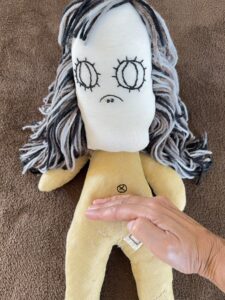
Once you’ve settled down
▪︎ Keep the skin-to skin contact until you can get blankets, or something similar, that you can use to wrap the newborn baby.
▪︎ Mom needs to drink water, and if you can, eat something to keep your energy up. You’ll need it for your recovery and for breastfeeding.
▪︎ Rest as much as possible.
▪︎ When you do the skin-to-skin contact, the infant will instinctively try to find the nipple. You can support the baby to move up the breast and onto the nipple. The baby needs a little time to latch onto the nipple and start sucking. The newborn’s sucking stimulates the nipple, and it begins switching on the cells in your breast that initiate your milk supply.
▪︎ Get help as soon as possible!!
⚠️
The baby is ready, but the mother is not… This is a natural birth without perfect sanitary conditions.
You might not want to think about giving birth without any medical intervention or skilled assistance. However, in the worst-case scenario, this knowledge will help you keep your head. You don’t want to panic.
Even if you are able to get to a hospital or evacuation shelter, there might be many victims and severe healthcare shortages. If you know how to give birth, you can ask someone to help and then give them directions.
To know, or not to know, which do you think is better?
Animals can do it, why can’t humans?
Please remember this, in an emergency.
See you next time.

Dear, Midwife Ikko san. Thank you so much for helping me!
.
Remember, “Protect your life by yourself” (自分の命は自分で守る). You need to survive first, and then you need your emergency supply. No matter how well you prepared your emergency supplies, if you die, then all of your preparations will have been for nothing. First and foremost, keep your health up all the time. Build your stamina so that if you need to, you can evacuate as quickly as possible. Stay healthy.

If you like, please check from post #1.
More Goriyama Posts