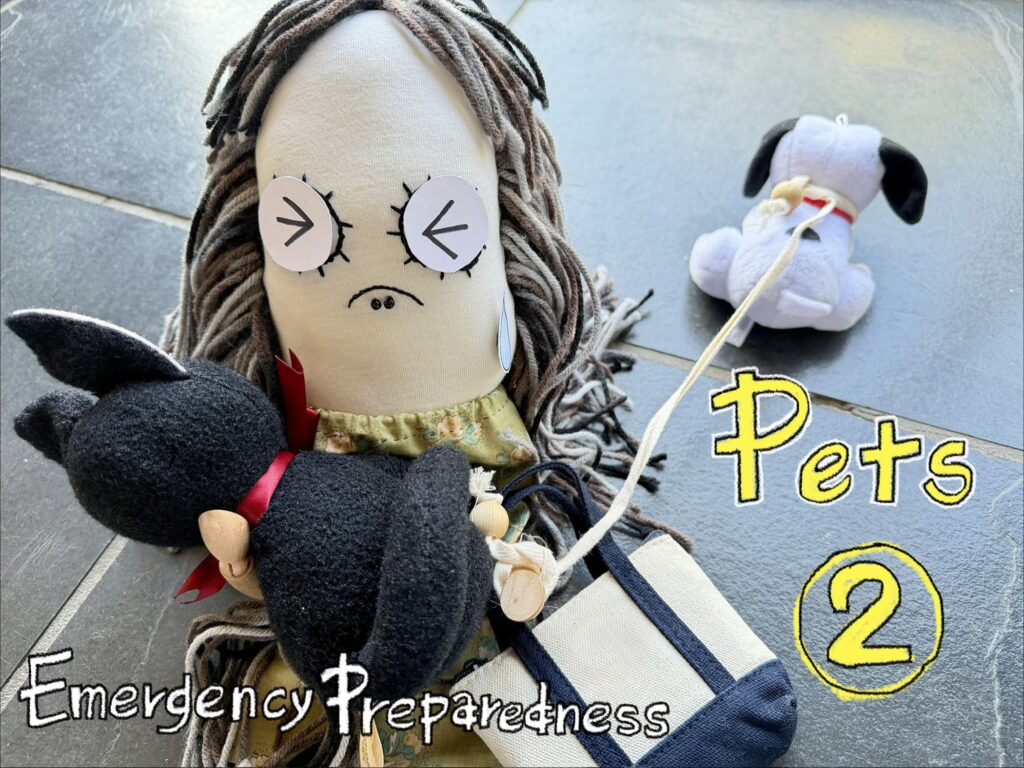
How should you prepare your pets for an emergency?
災害が起きる前にペットのために何を確認しておくべき?
I have a dog and I think I am ready! I keep lots of dog food, all the time! I’m ready!
I don’t know if I’ll be able to put my sweet kitties in a cage, in an emergency. I’m afraid they are not partial to cages. It’s been a long while since we last used a cage.
I need a cane fer walkin’. I reckon I ain’t gonna carry my doggo fer a vacuation…
When you decide to have pets, you have the responsibility to protect them as a member of your family. It’s exciting and fun to live with animals, but we need to appreciate that by domesticating animals, we have stripped away their natural survival instincts. We have changed their behavior. To live with humans, animals become obedient and docile, and they lose at least some of their natural abilities to survive in the wild. It’s up to us to protect them.
Who is responsible for preparing pets for emergencies?
There are many things pet owners need to check, before an emergency situation arises. It’s harder to prepare pets for emergencies than it is to prepare humans, because pets can not completely rely on rescue workers and evacuation shelters. You might have to spend a lot of extra time for preparation, but it’s worth it. They’re your responsibility, they’re you pets, and you love them.

What kinds of situations will pets and owners face in emergencies? #112
What do you need to check?

1. Is your pet’s emergency stockpile ready?
▪︎ If you plan to evacuate with your pets, please consider:
You need to set up evacuation bags for you and your pet. Did you prepare evacuation bags?
If you have small kids, you might have to bring even more stuff. Are you ready?
What will you do if you become injured? Do you have a contingency plan for your pet? Please think about this.
If you are a senior and have physical limitations, are you confident that you can carry your pets in an evacuation?
These are difficult questions, and they will not be easily answered. It is better to think these through and have a plan, than to be caught unprepared.

You should consider the possibility that you will be unable to use a baby stroller or a wheelchair, after a major disaster.
▪︎ If you stay home with your pets:
Do you have enough supplies to stay in your home?
Think about being without electricity and without water, for several days. Or several weeks.


2. Where is your pet’s evacuation shelter?
Find out whether or not your city’s evacuation shelters allow pets. Do this now, while you have an internet connection and time. And if your city doesn’t have shelters that allow pets, which areas do?
Make a list of evacuation shelters which accept pets.
Include areas outside of your city, too. (You never know where you might end up after an evacuation.)
3. Do you have any contingency plans, in case your evacuation shelter refuses your pets?
▪︎ Find pet-friendly lodgings?
Look for establishments that allow pets. Review their restrictions, additional fees and pet policies.
It was hard to find pet-friendly lodgings after the Palisades Fire in 2025. Everybody tried to find places and book them, all at the same time. Right away, there was fierce competition to find a place to stay. At the very least, make a list of pet-friendly lodgings, ahead of time.
▪︎ Communicate and plan with relatives, friends or some other network of support.
It would be helpful, during an emergency, to have relatives, friends or neighbors you can count on, or to know of a kennel that you can trust. Do you have such a support network?
4. Do you have your pet’s medical records?
Evacuation shelters, animal rescues, lodgings, clinics and boarding kennels will require your pet’s vaccination records and medical history. Will you have these available to show them, in an emergency? Do you have copies of your pets current vaccination records and medical history?
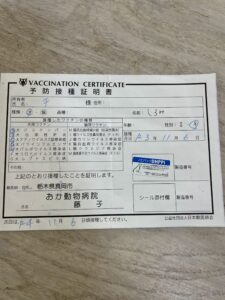
5. Do your pets have identification, in case you are separated from your pets?
▪︎ If your pets get lost?
Do your cats and dogs wear collars with up-to-date ID tags, or are they microchipped?

▪︎ What if you are not home in an emergency, and your pets are alone?
Do you have friends, family or neighbors that can help check on your pets in an emergency? Imagine a scenario where mandatory evacuation orders are issued for your neighborhood, and you’re not home. Are you on good enough terms with your neighbor that you can ask them to evacuate with your pets?

6. Are your pets adequately trained?
▪︎ Will your pet go into a cage or carrier without problems?
Can your pet enter a cage or a carrier and then remain well behaved? Would your pet be able to stay in the carrier for a long time? Even sleep there? Do you think you will be able to evacuate from your home, smoothly?

▪︎ Can your pet walk up and down stairs?
If not, can you walk up and down stairs while carrying your pet?


▪︎ Does your pet obey your commands?
Sit? Stay? Heel? When you call your pet’s name, do they respond ?

▪︎ Is your pet comfortable in unfamiliar places or strange environments?
If your neighbor or a rescue worker tries to evacuate your pet, will your pet be friendly and cooperative?


▪︎ Can your pet follow you closely, on a leash?
Can your pet remain calm, waking through a crowded area, even if there are loud noises and other animals?


Plan ahead or take action before disaster strikes
I ask a lot of questions in this post. How many of the questions could you answer? And how comfortable are you with your answers? I can’t answer these questions for you, and maybe you can’t answer them either. The questions are meant to get you thinking and, hopefully, inspire you to take action now, on behalf of your pets.
You have time to prepare, before disaster strikes. You give yourself more options and increase your chances of survival, by preparing early.
Planning ahead is extremely important for disaster preparedness, especially with animals that might limit your options for relief and rescue.
Your pets can not prepare for emergencies by themselves.
So, who must to do it?
High-maintenance animals are more difficult in emergencies. You already know how much of your time is spent taking care of your pets.
Being a pet owner can be a heavy burden to bear. Yes, it can bring you happiness and joy, but it’s not only that. It’s also taking on responsibility for one animal’s life.
I will share some tips on emergency preparedness for pets, in my next post.
See you next time.
Remember, “Protect your life by yourself” (自分の命は自分で守る). You need to survive first, and then you need your emergency supply. No matter how well you prepared your emergency supplies, if you die, then all of your preparations will have been for nothing. First and foremost, keep your health up all the time. Build your stamina so that if you need to, you can evacuate as quickly as possible. Stay healthy.

If you like, please check from post #1.
More Goriyama Posts