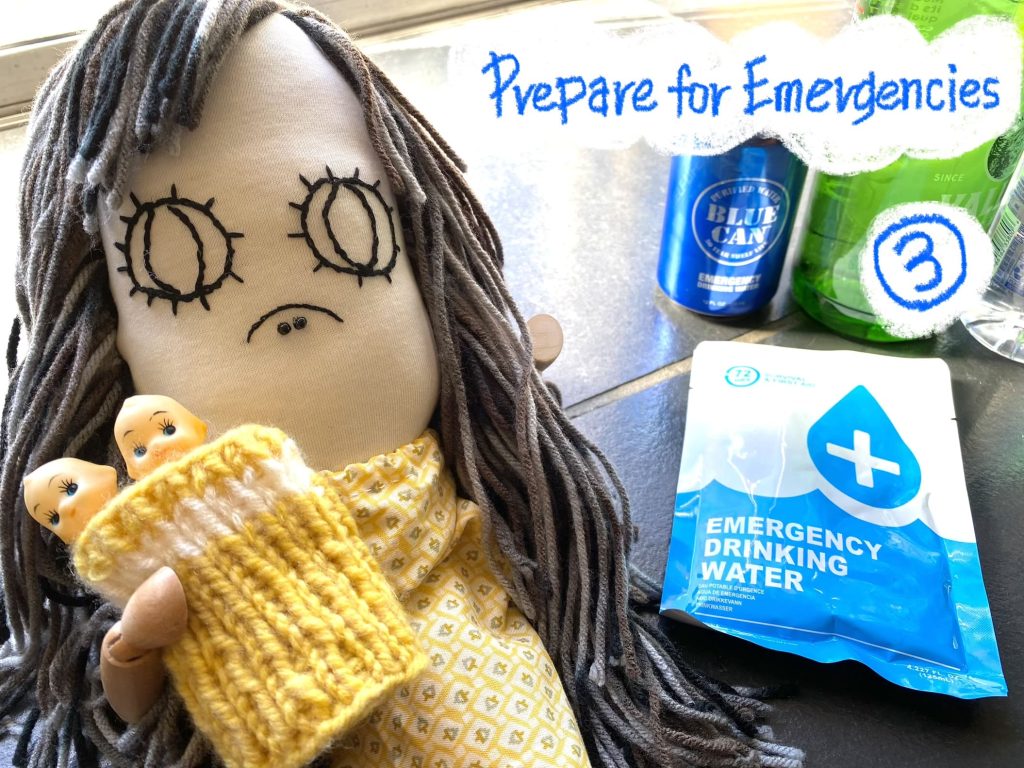
What things you should prepare first, for evacuation with your baby.
I am ready to go to the hospital when I go into labor, but I’m not prepared for an evacuation.
I have an emergency bag, but I didn’t put any baby goods in it.
I have a big stroller that I can use to carry lots of baby stuff.
You’re preparing for an emergency, you’re packing your emergency bags, and you’re setting up your stockpiles. Oh, and one more thing: you’re pregnant. That’s our topic for today. You’re pregnant or you have a small baby; what are the things you need to consider? What are the first things you should prepare?
“Oh my goodness!” Really?
Preparing for emergencies is hard enough without needing to worry about babies.
This is such a difficult topic!
It’s hard enough figuring out how to prepare for emergencies without a small baby. When factoring in a little one — whether here already or on the way — you need extra time, extra preparation, and extra thought to deal with all of the extra complexity.
Yes! That’s a lot of “extras!”
First, you can follow the basic emergency preparedness steps (check past posts, starting with post #1), and then add extra emergency supplies, for any small babies and pregnant moms.
Prepare water!!
Water is the first thing you need to prepare for babies and pregnant women. (Actually for all people. Check post #2.) Why?
Water problems in emergencies
★ Water outage.
If you didn’t prepare emergency water, you will not be able to make formula from powder. And you will not be able to wash your milk bottles to keep them clean after using them. If a breastfeeding mother gets dehydrated, it can decrease the total volume of milk produced for the baby.
Even if you have emergency water filters (see post #11), you might not completely trust contaminated surface water or groundwater for your baby. Babies should not drink water directly from rivers, lakes or wells because of Clostridium botulinum, Escherichia coli and other bacteria and parasites.
Water contamination can be of particular concern for the pregnant woman who already has reduced immunity because of her pregnancy.
A long time ago, our ancestors could breastfeed exclusively without filtered water.
If they hadn’t been able to find water that was clean enough, we wouldn’t be here.
Mothers’ bodies worked as human water filters, sufficient for survival.
But now, we need to worry about chemical, biological, and radioactive contaminants in the water.
The human body may not be able to purify such toxins.
★ Scarcity of water supply.
Major disasters often damage infrastructure and impact supply chains. Governments will often not be able to provide urgently needed relief, right away. Even if stores open after a disaster, drinking water can sell out quickly.

Can you wait in a long line with your baby?
Pregnant women need more water
★ Recommendation for water intake is to drink 8 to 10 glasses of water (8 oz each) every day.
Water supports fetal circulation, amniotic fluid, and higher blood volume (which supplies babies with the oxygen and nutrients they need to grow). Also it helps prevent common pregnancy problems like constipation and hemorrhoids by keeping your bowels moving and stools soft. Plus it reduces the risk of UTI’s (urinary tract and bladder infections).
Infants and small children need more water
★ Dehydration can rapidly develop in infants and small children.
▪︎ Infants and small children have higher water requirements relative to body size. Small amount of fluid loss can have a more significant impact on their hydration status.
▪︎ Higher metabolic rate leads to increased water loss, and children lose water even more rapidly through sweating, during play or exercise.
▪︎ Less awareness of thirst. Children may not recognize when they are thirsty. If they are not reminded to drink regularly, they can easily become dehydrated.
▪︎ Children are more susceptible to heat-related illnesses than adults.
★ Water helps support digestion and nutrient absorption
When children eat, their bodies require sufficient fluids to help transport nutrients through their digestive systems. Water is essential for proper digestion. If children do not ingest enough water, they can experience issues like constipation, indigestion, or stomach cramps. These issues can make for a hard time during a disaster.
Water quality and breastfeeding
Public water systems remove, basically, every harmful pollutant from water nowadays (check post #7). But if a major disaster strikes and the water purification system goes offline, what will happen?
★ Contaminant transfer
Pollutants in tap water, such as arsenic, lead, mercury, and chlorine byproducts, can potentially accumulate in breast milk. In areas with high water contamination, breastfeeding exclusively is critical to protect the infant. (For more info on this, check out Health e-Learning.)
Compared to formula made with unsafe water, breastfeeding is preferable.
Breastfeeding is highly effective at protecting infants from pathogens in contaminated water.
Expectant mothers should be especially wary of the dangers posed by unsafe drinking water. Pollutants can be a risk to both mother and fetus. Contaminated water can cause serious complications in pregnancy, such as preterm delivery, miscarriage, and still birth. Fetal complications can include low weight for gestational age and other developmental issues.
Compared to adults, children are more vulnerable to drinking water contaminants due to several different factors. They have a higher rate of fluid intake relative to body weight, their immune systems are not yet fully developed, and they have a higher risk of rapid dehydration from illnesses. A waterborne disease, for example, is likely to have a more serious effect (like diarrhea) on a small child than on an adult.
⚠️
Breastfeeding is Life-Saving Protection in an Emergency!
★ Risk of PFAS (Per-and poly-fluoroalkyl substances)
PFAS are widely used manufactured chemicals that are now ubiquitous. They don’t easily break down and can persist in our bodies and the environment for decades. High blood pressure, thyroid disease, and infertility are known effects of PFAS on humans. Drinking water is one of the most significant pathways of PFAS exposure.
Check out this interactive map showing PFAS contamination in the U.S.: Environmental Working Group. You can find more info about PFAS and pregnancy at CDPHE (Colorado Department of Public Health and Environment).
It is very hard to reduce PFAS exposure in emergencies,
but if you know how, you can reduce PFAS exposure, at least a little bit. It might help.
Check this page about reducing exposure to PFAS: CDPHE.
Pointers for Preparing Emergency Water
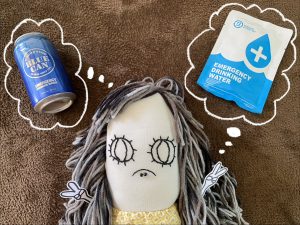
1. If you have not prepared any water yet, please prepare an emergency water supply in your home, now. Any supply is better than nothing.
At this point, you just need to get extra water for emergencies (see post #6). Put some thought into where you place your emergency water. You need to store your water in places with no direct sunlight, no high-temperatures, and no high-humidity, to the extent possible (see post #4).
I recommend that you do not keep water in only one place.
Keep extra water in at least 2 separate locations (see post #5).
2. Get a portable water filter.
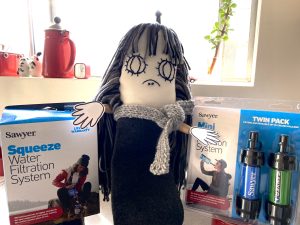
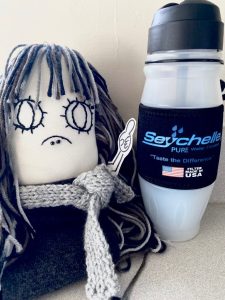
While a water filter might not ensure safe water for a pregnant woman or babies, it’s better than nothing. It will help to remove contaminants from the water in emergencies.
There are many kinds of water filters on the market. Find a good one that fits with your situation, and try to find a filter whose specifications include the most possible pollutants.
I recommend procuring a portable water filter. (Check out post #11.)
It’s easy to carry it in your heavy mother’s bag, and you can use it anytime,
even when it’s not an emergency situation.
3. Make a note of which services will provide water after a major disaster.
Check the locations where emergency water will be distributed, places like the Disaster Recovery Centers (DRC’s) organized by the U.S. Federal Emergency Management Agency (FEMA) and Red Cross.
4. Learn the breastfeeding basics.
Breastfeeding saves lives in emergencies. Human milk is the perfect nutrition for infants. It also contains antibodies that fight infection and disease. Contaminated water, poor sanitation, and the spread of germs and bacteria are common during disaster recovery. The safest and most sanitary food is the mother’s own milk. Breastfeeding helps keep infants warm. It also lowers stress levels and calms traumatized infants and mothers.
The best way to learn to breastfeed is to ask a midwife, a lactation consultant, or any person who has breastfed.
More information
Check out these links.
▪︎ How to breastfeed: La Leche League
▪︎ Lactation consultant: The lactation network
▪︎ Infant feeding in emergencies: La Leche League
Now you understand why you should prepare water for emergencies. It might be hard to get water, in the middle of a disaster, with a newborn baby in tow or while pregnant. You need to figure out how to get water for your family.
Water is just one of many critical emergency supplies. There are other important things you will need to prepare to help you and your loved ones survive. I will talk more, next time, about what you need to prepare for emergencies, for your pregnancy, and for your baby. Please tune in next post; we’ll continue on this topic.
See you next time.
Remember, “Protect your life by yourself” (自分の命は自分で守る). You need to survive first, and then you need your emergency supply. No matter how well you prepared your emergency supplies, if you die, then all of your preparations will have been for nothing. First and foremost, keep your health up all the time. Build your stamina so that if you need to, you can evacuate as quickly as possible. Stay healthy.
